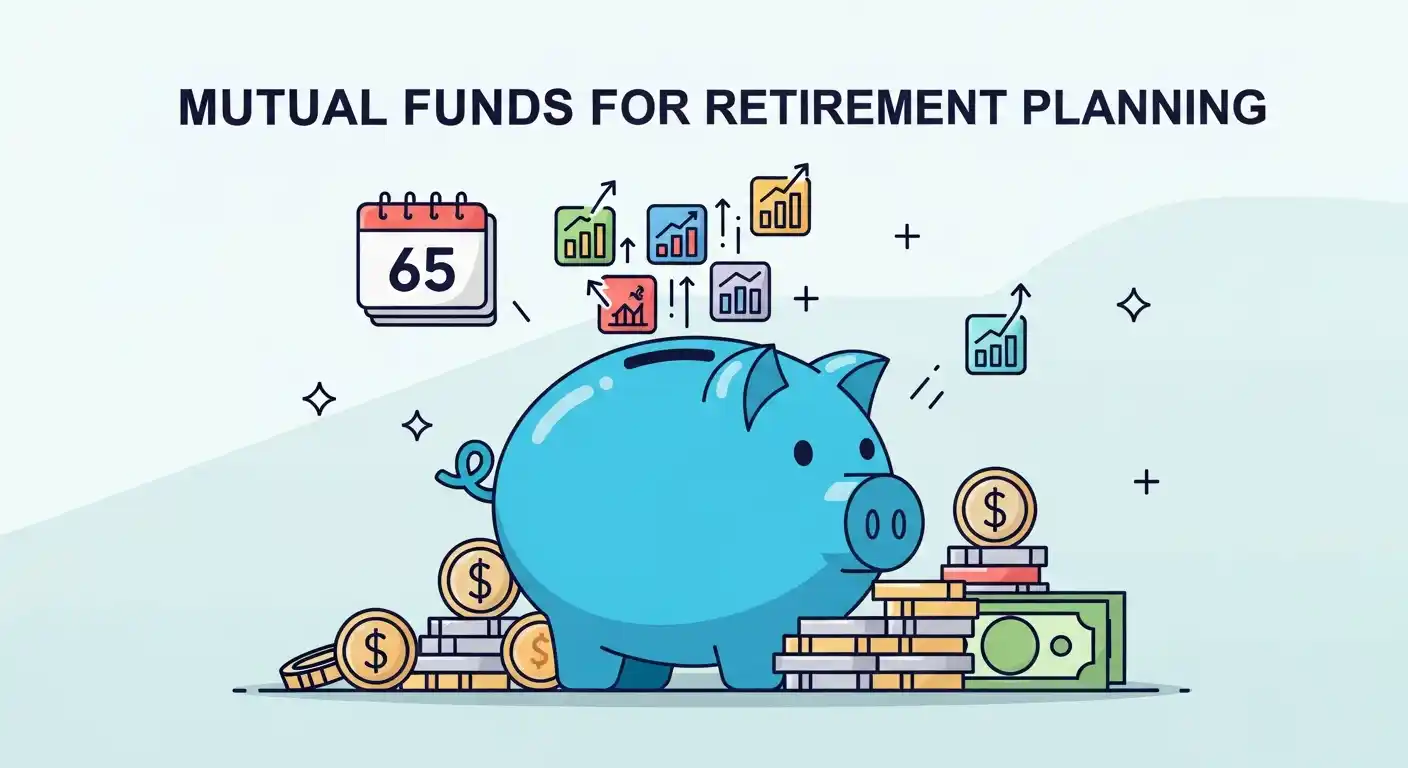
Mutual Funds for Retirement Planning- Retirement might seem far away, but here’s the truth—the earlier you start planning, the more comfortable your golden years will be. Yet, many people only realise the importance of retirement planning when they’re nearing their 60s, and by then, it’s almost too late to build the corpus they need.
The good news? Mutual funds offer one of the smartest ways to build your retirement nest egg. They combine growth potential, professional management, and flexibility—everything you need to retire on your own terms.
In this guide, I’ll walk you through everything you need to know about using mutual funds for retirement planning in India, from understanding their role to building a portfolio that works for you.
Why Mutual Funds Are Perfect for Retirement Planning
Think of mutual funds as your financial partner for the long journey to retirement. Here’s why they’re so effective:
1. Growth That Beats Inflation
Traditional options like Fixed Deposits, PPF, or EPF are safe, but their returns barely keep pace with inflation. If inflation is running at 6% and your FD gives you 6.5%, you’re barely breaking even.
Equity mutual funds have historically delivered 12-15% annual returns over long periods. This higher growth potential helps you build a much larger retirement corpus, translating to a genuinely comfortable post-retirement life.
Example: ₹10,000 monthly SIP for 30 years:
- At 7% (PPF rate): ₹1.2 crore
- At 12% (equity fund average): ₹3.5 crore
- Difference: ₹2.3 crore!
2. Diversification Protects Your Money
Mutual funds invest in dozens or even hundreds of different companies across various sectors. This means if one company fails or one sector underperforms, your entire retirement savings don’t suffer.
It’s like not putting all your retirement eggs in one basket. You’re spreading the risk while capturing growth opportunities.
3. Expert Management Without the Hassle
You don’t need to become a stock market expert or spend hours analyzing companies. Professional fund managers with years of experience handle all investment decisions for you.
They research companies, monitor markets, and adjust portfolios based on economic conditions. You simply invest regularly and let them do the heavy lifting.
4. Flexibility to Match Your Life Stage
Mutual funds come in all flavors—aggressive equity funds when you’re young, balanced hybrid funds in your 40s, and safer debt funds as you near retirement.
You can adjust your strategy as you age, starting aggressive and gradually becoming more conservative. Plus, SIPs (Systematic Investment Plans) let you invest small amounts regularly, making it affordable at any income level.
5. Tax Benefits While Building Wealth
ELSS (Equity Linked Savings Schemes) offer a double benefit:
- Save up to ₹46,800 in taxes under Section 80C
- Get equity-like growth potential for your retirement corpus
It’s rare to find an investment that helps you save taxes today while building wealth for tomorrow.
6. Access Your Money When Needed
Unlike EPF or PPF with strict withdrawal rules, most mutual funds offer good liquidity. If you face a genuine emergency during retirement, you can access your money (though some funds have exit loads if withdrawn too early).
This flexibility gives you peace of mind that your money isn’t locked away forever.
7. The Magic of Compounding
This is the real superpower. Your returns generate returns, which generate more returns. Over 20-30 years, compounding creates wealth that seems almost magical.
Example: ₹5,000 monthly SIP for 25 years at 12% returns:
- Total investment: ₹15 lakhs
- Final corpus: ₹94.7 lakhs
- Your profit: ₹79.7 lakhs (5x your investment!)
Start early, and compounding does most of the work for you.
Building Your Retirement Portfolio: A Step-by-Step Plan
Let’s get practical. Here’s how to actually build a retirement portfolio using mutual funds.
Step 1: Set Crystal-Clear Retirement Goals
Before investing a single rupee, answer these questions:
When do you want to retire?
- At 55? 60? 65?
- This determines your investment timeline
What lifestyle do you envision?
- Comfortable but modest?
- Traveling frequently?
- Supporting family members?
How much will you need?
- Current monthly expenses: ₹50,000
- Accounting for inflation (6%), in 25 years: ₹2.1 lakhs/month
- Retirement corpus needed: ₹3-4 crore (for ₹2.1L monthly for 20 years)
Rule of thumb: You’ll need 20-30 times your annual expenses as your retirement corpus.
Step 2: Know Your Risk Tolerance
Your risk appetite should match your age and personality.
In your 20s-30s (30+ years to retirement):
- Risk tolerance: High
- You can handle market volatility
- Focus: Maximum growth
In your 40s (15-20 years to retirement):
- Risk tolerance: Moderate
- Balance growth with some safety
- Focus: Steady accumulation
In your 50s (5-10 years to retirement):
- Risk tolerance: Low to Moderate
- Protect what you’ve built
- Focus: Capital preservation
Ask yourself: Would a 20% drop in your portfolio keep you up at night? If yes, dial down the risk.
Step 3: Diversify Your Retirement Portfolio
Don’t put everything in one type of fund. Build a balanced mix based on your age:
Portfolio for Someone in Their 30s:
- 70% Equity funds (large-cap, flexi-cap, mid-cap)
- 20% Hybrid funds
- 10% Debt funds
Portfolio for Someone in Their 40s:
- 60% Equity funds
- 30% Hybrid funds
- 10% Debt funds
Portfolio for Someone in Their 50s:
- 40% Equity funds
- 30% Hybrid funds
- 30% Debt funds
After Retirement (60+):
- 20-30% Equity funds (for inflation protection)
- 30% Hybrid funds
- 40-50% Debt funds (for stability and regular income)
Step 4: Start Early and Stay Consistent
The biggest advantage you have is time. Start as early as possible, even with small amounts.
Starting at 25 vs. 35 (both investing ₹10,000 monthly at 12% returns):
Starting at 25 (35 years):
- Total investment: ₹42 lakhs
- Final corpus: ₹6.4 crore
Starting at 35 (25 years):
- Total investment: ₹30 lakhs
- Final corpus: ₹1.9 crore
Starting just 10 years earlier gives you ₹4.5 crore more!
Use SIPs: Invest a fixed amount every month. It removes the pressure of timing the market and builds discipline.
Step 5: Review and Rebalance Regularly
Your portfolio won’t stay balanced on its own. Markets move, and your allocation shifts.
Set annual reviews:
- Check if your equity-debt ratio has changed significantly
- See if any fund is consistently underperforming
- Adjust based on life changes (kids, job change, nearing retirement)
Rebalance when needed:
- If your 60:40 equity-debt split becomes 75:25, rebalance
- Sell some equity and buy debt to restore your target allocation
This forces you to “sell high, buy low” automatically.
Common Mistakes That Can Derail Your Retirement Plans
Avoid these pitfalls that trip up many investors:
1. Ignoring Time Horizon
- Mistake: Treating your 30-year retirement plan like a 3-year investment.
- Reality: Retirement planning is a marathon, not a sprint. Short-term market drops don’t matter when you have decades to invest.
- Fix: Match your fund choices to your timeline. More equity when you’re young, gradually shifting to debt as you near retirement.
2. Emotional Investing
- Mistake: Panic selling during market crashes or greedily chasing last year’s top performers.
- Reality: Markets go up and down. That’s normal. Emotional decisions usually lead to buying high and selling low—the opposite of what works.
- Fix: Stick to your plan. Use SIPs to automate investing so emotions don’t interfere.
3. Overlooking Fees
- Mistake: Not paying attention to expense ratios and other charges.
- Reality: A 1% difference in fees can cost you lakhs over 30 years due to compounding.
Fix:
- Choose direct plans over regular plans (0.5-1% lower fees)
- Compare expense ratios between similar funds
- Understand exit loads before investing
4. Neglecting Diversification
- Mistake: Putting all retirement savings in one fund or one type of fund.
- Reality: If that fund or sector underperforms, your entire retirement is at risk.
- Fix: Spread across equity, debt, and hybrid funds. Diversify within equity too (large-cap, mid-cap, flexi-cap).
5. Chasing Past Performance
- Mistake: Investing only in last year’s best-performing funds.
- Reality: Last year’s winner is often this year’s laggard. Performance cycles change.
- Fix: Focus on consistency over 3-5 years, fund manager experience, and investment philosophy—not just recent returns.
6. Ignoring Tax Planning
- Mistake: Not considering tax implications of withdrawals and investments.
- Reality: Taxes can significantly reduce your effective returns, especially in retirement.
Fix:
- Use ELSS for tax deductions while building corpus
- Plan withdrawals to minimize tax liability
- Hold equity funds for more than 1 year for lower tax rates
- Consult a tax advisor for retirement-phase planning
Your Retirement Action Plan
Ready to take control of your retirement? Here’s your step-by-step action plan:
This Month:
- Calculate how much you need for retirement
- Assess how many years you have
- Determine your risk tolerance
- Open investment accounts if needed
This Quarter:
- Choose 4-6 mutual funds based on your age and risk profile
- Start SIPs (even ₹2,000-3,000 monthly is a great start)
- Set up automatic transfers so you never miss an investment
This Year:
- Increase SIP amounts by 10% annually
- Review portfolio performance
- Rebalance if allocation has drifted significantly
Every Year:
- Annual comprehensive portfolio review
- Adjust strategy as you age (gradually reduce equity, increase debt)
- Ensure contributions increase with salary hikes
Final Thoughts
Retirement planning through mutual funds isn’t complicated, but it does require discipline and consistency. The beauty is that you don’t need to be a financial genius or have lakhs to invest upfront.
Start small, stay consistent, think long-term, and let compounding work its magic. Even ₹3,000-5,000 monthly invested consistently over 25-30 years can build a corpus that lets you retire with dignity and comfort.
The biggest mistake isn’t choosing the wrong fund—it’s not starting at all. Your future self is depending on the decisions you make today.
Don’t wait for the “perfect” time or the “right” amount. Start now, start small, but start.
Related Post:
- 10 Tips for Diversifying Your Mutual Fund Portfolio in 2025
- How to Choose Mutual Funds in India in 2025
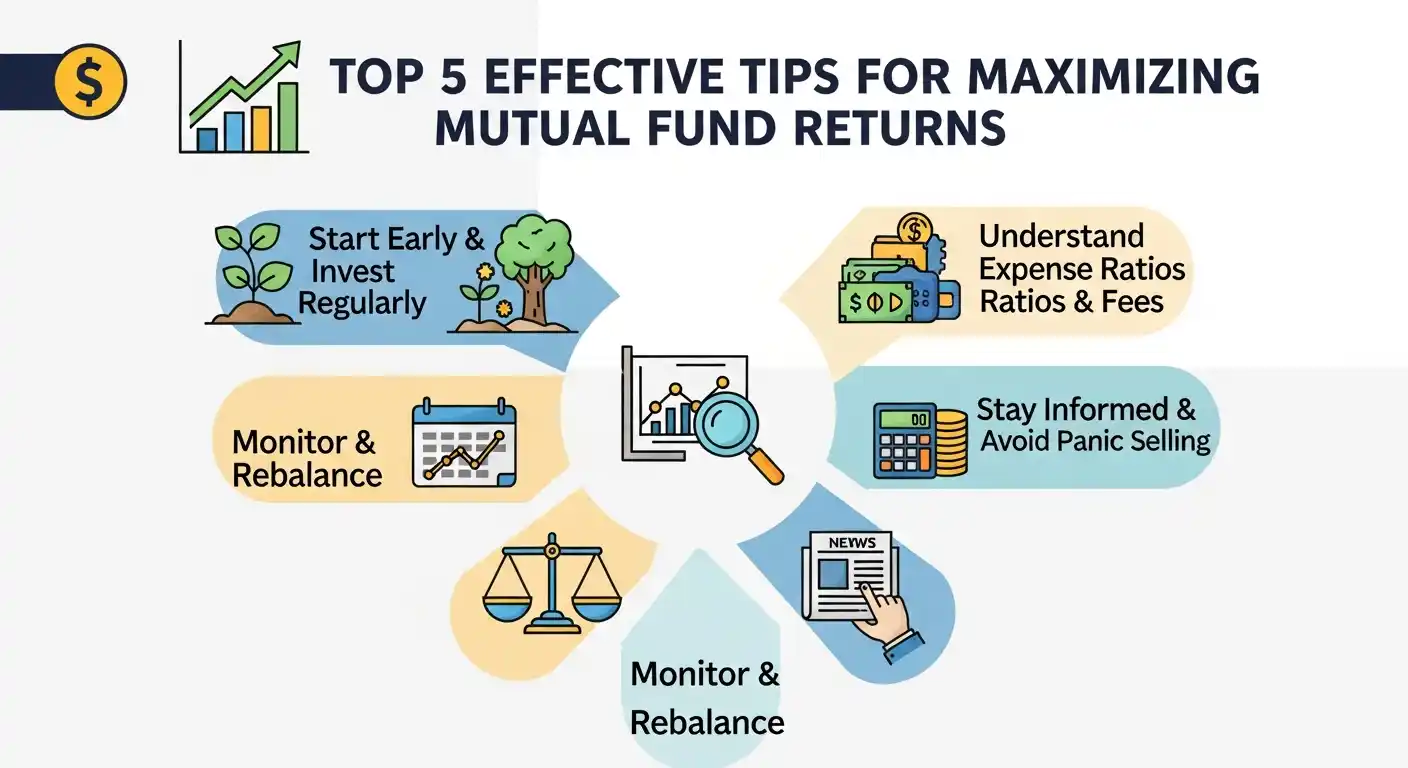
- Top 5 Effective Tips for Maximizing Mutual Fund Returns
FAQ on Mutual Funds for Retirement Planning
What’s the minimum I can invest in mutual funds?
Many mutual funds, including those from Shriram AMC, allow you to start SIPs with just ₹500 per month. Some funds accept ₹1,000 minimum. The key is starting, not the amount.
How often should I review my retirement portfolio?
Review every 6-12 months is ideal. Check performance, rebalance if needed, and adjust strategy as you get older. But don’t obsess over daily or monthly changes—that causes unnecessary stress.
When is the best time to start investing for retirement?
Right now! The best time was yesterday; the second-best time is today. The earlier you start, the more time compounding has to work. Even starting at 35 or 40 is better than 45 or 50.
Are mutual funds safe for retirement?
Mutual funds carry market risks, but diversification and professional management help mitigate them. For retirement, the bigger risk is not investing enough or starting too late. Proper diversification makes mutual funds suitable for long-term retirement goals.
Can I withdraw money before retirement?
Yes, most mutual funds (except ELSS with 3-year lock-in) allow withdrawals anytime. However, early withdrawals may attract exit loads and reduce your retirement corpus. Withdraw only for genuine emergencies.
Should I choose regular or direct plans?
Always choose direct plans for retirement investing. They have lower expense ratios (0.5-1% less) than regular plans, which translates to significantly higher wealth after 25-30 years. You can invest in direct plans through AMC websites or platforms like Groww, Kuvera, or Zerodha Coin.
What if I’m 50 and haven’t started?
It’s not too late, but you’ll need to be more aggressive with contributions. Focus on:
- Maximizing SIP amounts
- Balancing equity (for growth) with debt (for safety)
- Possibly delaying retirement by a few years
- Reducing planned retirement expenses
- Consulting a financial advisor for a catch-up strategy
Disclaimer: This article is for educational purposes only and not personalized financial advice. Mutual fund investments are subject to market risks. The suggested allocations and strategies are examples and may not suit everyone. Past performance doesn’t guarantee future results. Please read all scheme-related documents carefully and consult a certified financial advisor or retirement planner to create a strategy based on your specific age, goals, risk tolerance, and financial circumstances.